Mastering Grok Bot Skills Architecture for Production Routines
This article was produced with AI assistance. Editorial standards apply.
 AI Edited
 Last updated: August 30, 2026
This article was produced with AI assistance. Editorial standards apply.
Key takeaways
- Production routines need four layers: role, untrusted envelope, typed tools, structured output.
- A product skill is a reusable instruction pack inside Grok Bot. A disk folder is a different surface.
- File-format details live on the CLI guide. This page stays on runtime architecture.
- Routines schedule a skill. They do not replace approval on writes.
Master Grok bot skills architecture by locking four layers: role prompt, untrusted envelope, typed tools, and a dry-run output contract. The engineering hub is the silo parent for those production sandboxes.
Lock four layers before you automate {#four-layer}
Unstructured chat is not a skill. BotSkillsStack listings treat a production routine as four immutable layers.
| Layer | Job |
|---|---|
| 1 Role | Negative constraints, status codes, no preamble |
| 2 Envelope | Wrap tickets, diffs, and email in <untrusted_external_content> |
| 3 Tools | JSON Schema functions the process executes |
| 4 Contract | Preview JSON with dry_run: true before mutation |
Layer 4 is the two-phase dry-run gate. Grok Bot approval docs keep sending, purchasing, deletion, and production changes behind Allow once. Architecture without that gate is a prompt with extra YAML.
What is a Grok skill file {#skill-file}
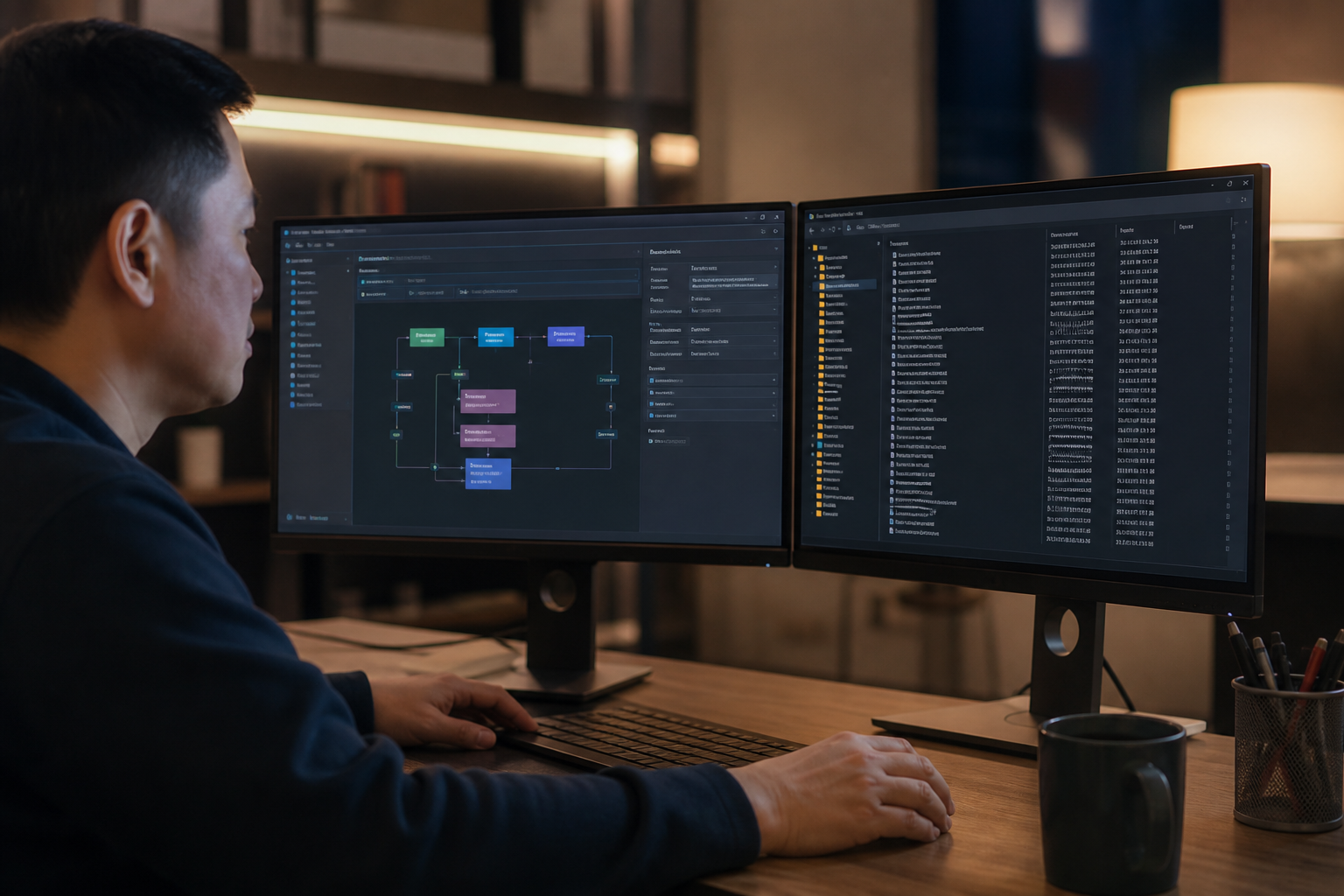

A Grok skill file is a disk folder the Build/CLI surface discovers: markdown instructions plus optional scripts. Search for grok skill files ranks on the Grok CLI skill-file guide, not this architecture page. xAI Skills, Plugins and Marketplaces documents discovery roots such as ./.grok/skills/ and ~/.grok/skills/.
That file format is not this URL’s ranking job. For folder layout, frontmatter fields, and slash-command invocation, use the CLI guide. This page only needs the distinction: a saved Grok Bot skill is a product object (/ in the composer); a skill file is a repo artifact the CLI walks.
Do not copy CLI discovery rules here. Link out. Keep this H2 as the map, not the spec.
Typed tools instead of free-form writes {#typed-tools}
xAI function calling requires name, description, and a parameters schema whose root is an object. The model requests the call. Your runtime executes it. Free-form SQL or shell in the completion is not a layer-3 skill.
Directory listings such as the agent team advisor skill expose that tools JSON in HTML. Copy the schema. Do not let the model invent keys.
CTA: Open one sandbox, copy tools, and refuse any write tool that lacks dry_run.
Product skills versus scheduled routines {#product-skills}
Grok Bot skills and routines split the product: a skill is how; a routine is when. Save the method after one successful task. Then schedule. Test run still performs real work—use safe inputs.
A Bot can own up to 50 routines (docs). Deleting a routine has no undo. Teach-a-task records up to ten minutes of computer interaction and produces a draft skill you still edit for approval boundaries.
Directory skills on BotSkillsStack are the same four-layer contract rendered as crawlable /bots/{slug} pages. Browse the engineering hub when you need the HTML twin, not only a private / menu item. @xai’s public API posts describe models you call from those tools; they do not replace the envelope or the dry-run.
FAQ {#faq}
What is a Grok skill file?
A discoverable folder of instructions (and optional scripts) on the CLI/Build surface. File-format ranking and frontmatter tables live on the Grok CLI skill-file guide.
How does a Grok Bot skill differ from that folder?
The product skill is saved inside Grok Bot and invoked with /. The folder is walked from .grok/skills paths. Different surfaces. Same idea: reusable instructions.
What layers belong in a production routine?
Role, untrusted envelope, typed tools, structured dry-run output. Skip any layer and you have a chatbot.
When should a skill become a routine?
After a one-off task is reliable. Then schedule. Keep writes on approval.
Related reading
Search BotSkillsStack skills architecture on Google for more operator specs.
CTA: Copy one listing’s tools schema, then add the untrusted envelope before you automate.